
DOWN THE S(W)UIT MEMORY LANE
May 08,2025 | Versuitile Editor
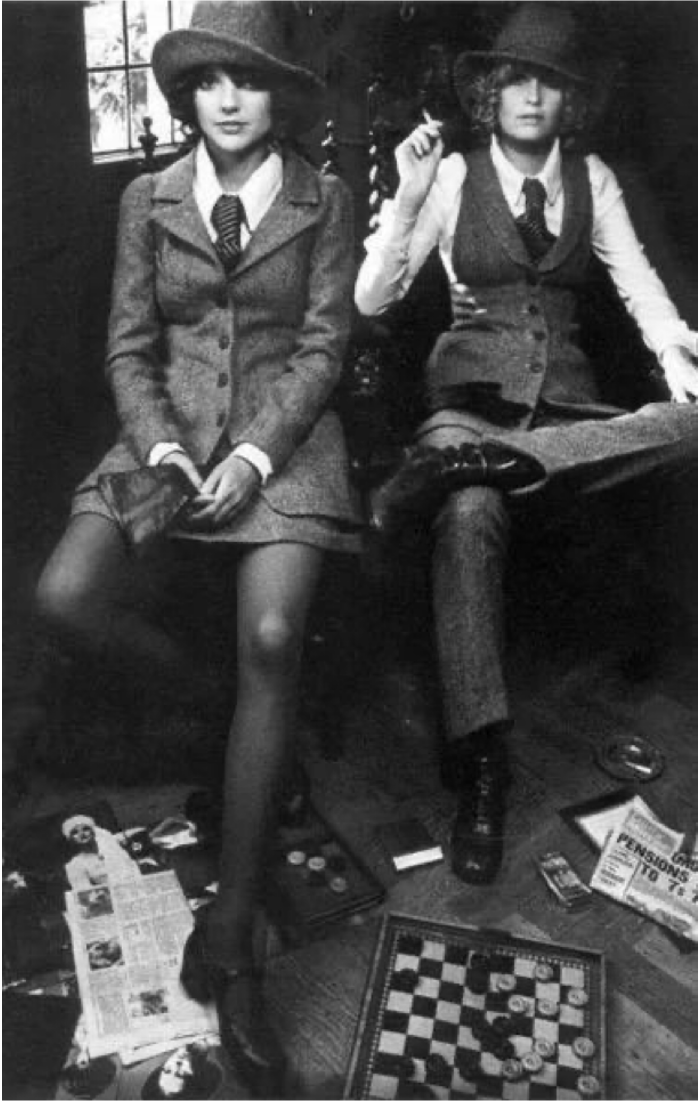 Photo credit to imgur.com
The history of the power suit for women is quite intriguing. In earlier times, societal restrictions prevented women from wearing certain garments, such as trousers and blazers, with the belief that only skirts and dresses were appropriate attire. Even the introduction of 'bloomers,' designed to enable women to engage in activities like horseback riding, faced opposition from the medical community, which argued that wearing trousers could jeopardize women's fertility. By the early 20th century, the 'power suit' gained popularity as suffragettes challenged conventions, using their clothing to make political statements.
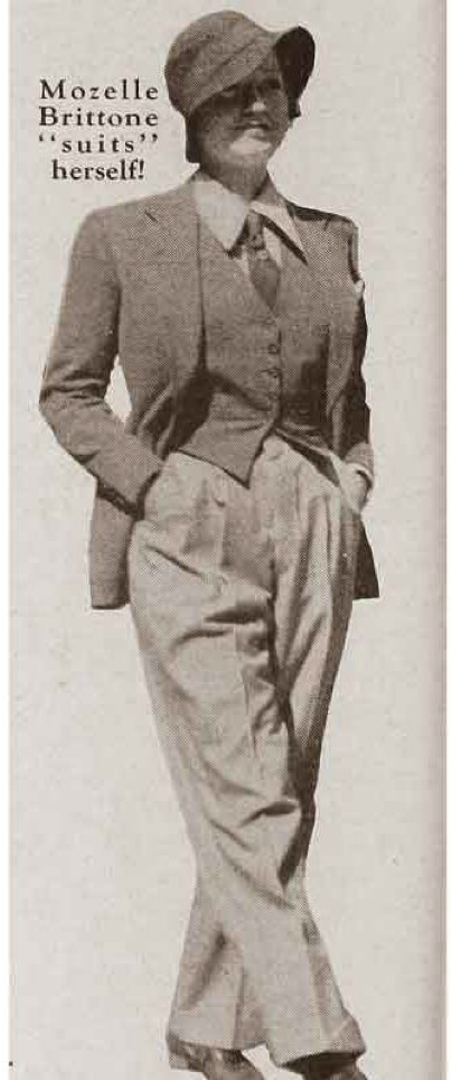
The landscape of women's fashion underwent significant changes during World War II, as more women joined the workforce, highlighting their crucial role in the war effort. In the post-war years, there was a dichotomy in attitudes toward women's clothing. While some embraced the return to 'dresses and skirts,' exemplified by Dior's iconic A-Line, others were reluctant to bid farewell to the power suit.
It wasn't until the 1960s, 1970s, and 1980s that legislation prohibited employers from discriminating against workers based on their sex when it came to wearing suits. In 1870, actress Sarah Bernhardt made a significant statement by publicly adopting "boy's clothes," marking the initial noteworthy instance of a woman personalizing a man's suit for herself. She further challenged traditional gender roles by portraying Hamlet in 1899.
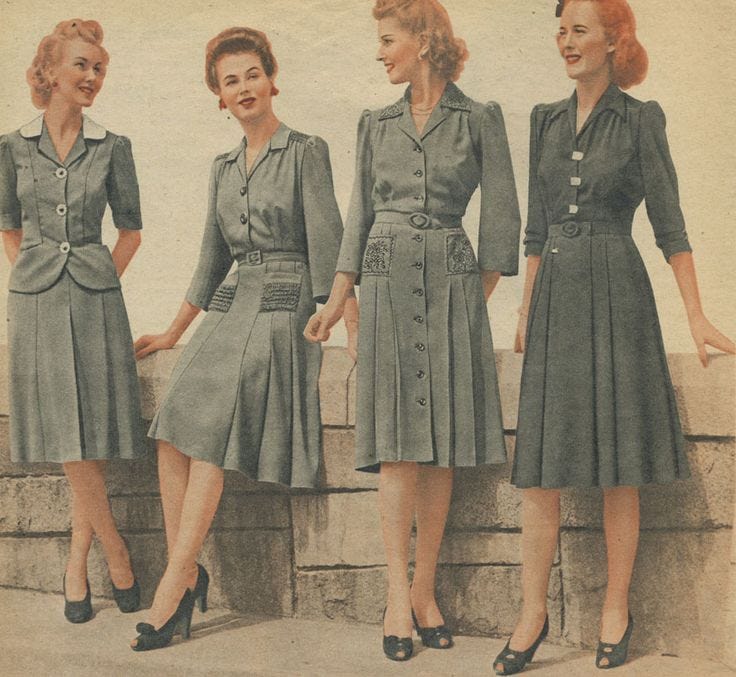
Photo credit to medium.com
The landscape of women's fashion underwent significant changes during World War II, as more women joined the workforce, highlighting their crucial role in the war effort. In the post-war years, there was a dichotomy in attitudes toward women's clothing. While some embraced the return to 'dresses and skirts,' exemplified by Dior's iconic A-Line, others were reluctant to bid farewell to the power suit. It wasn't until the 1960s, 1970s, and 1980s that legislation prohibited employers from discriminating against workers based on their sex when it came to wearing suits.
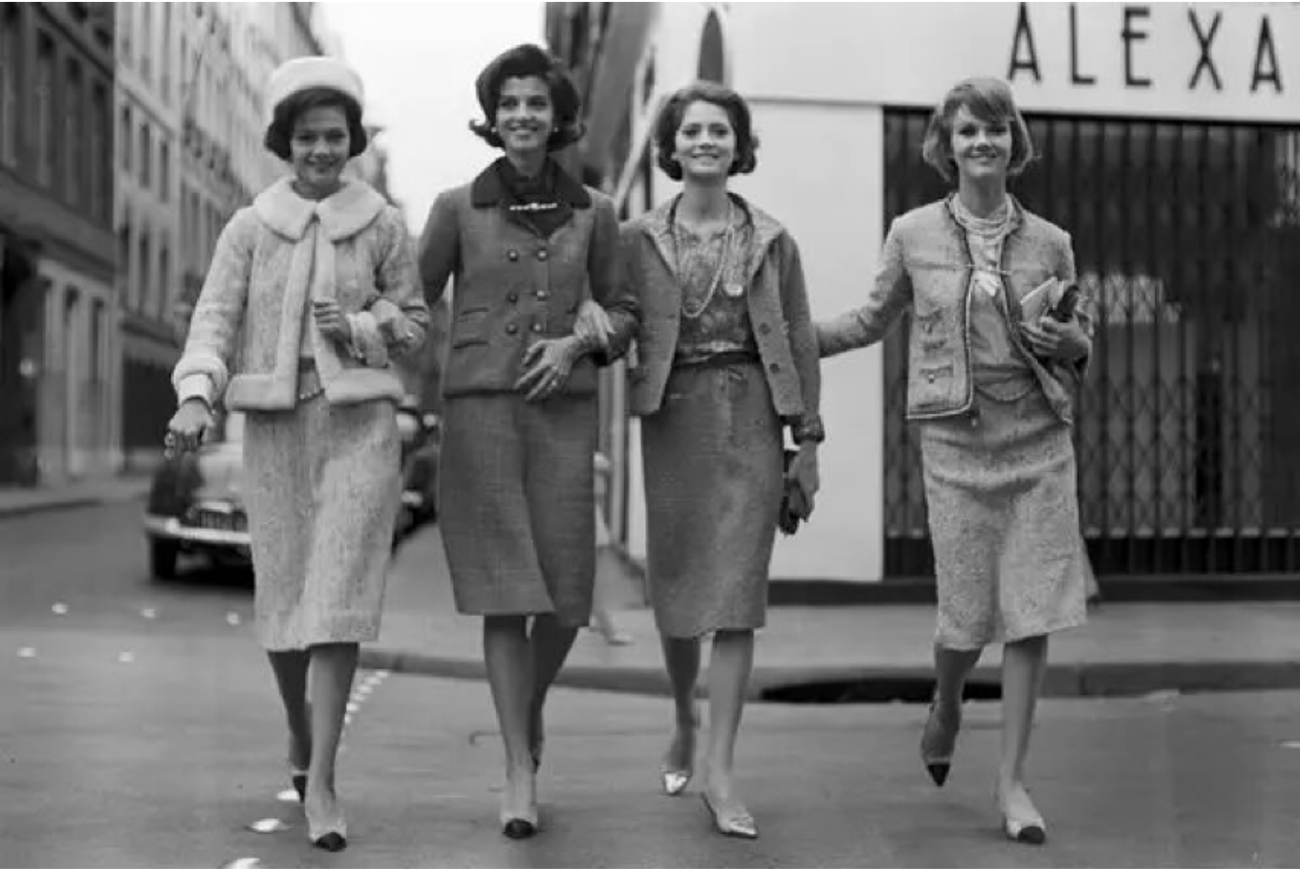
Photo credit to hotelcappolonio.com.ar
The credit for the prominence of power dressing often goes to the Chanel suit. This famous ensemble featured a high-quality wooled blazer with a collarless, button-up design and a fitted skirt. Since then, the power suit has undergone transformations to align with evolving fashion trends and cultural shifts.
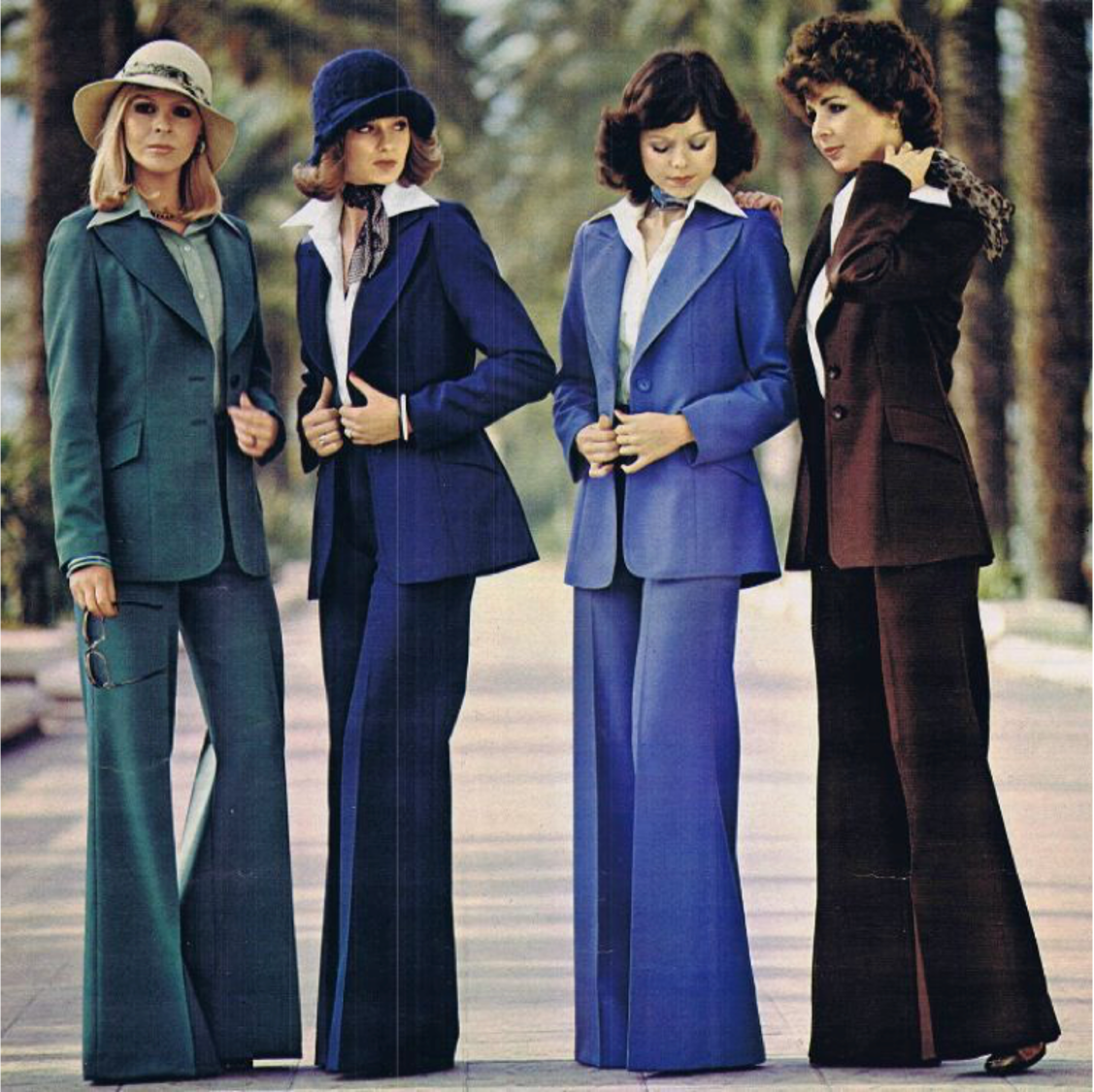
Photo credit to elanstreet.com
In recent years, there has been a noteworthy shift in the fashion scene regarding how women embrace suits. Originally associated mainly with men's clothing, women's suits have transformed into a symbol of empowerment, style, and versatility. The increasing presence of professional women has prompted the fashion industry to tailor its offerings to meet their needs. This involves the development of collections that embrace timeless designs crafted from high-quality, natural fabrics. The suit is not only acknowledged as one of the most influential articles of clothing globally but also serves as a political statement.
THE END
Love from the Versuitile Team